Industrial Dry Fog Dust Suppression System About
SPECIFICATION
| Usage/Application | Agricultural |
| Material | Mild Steel |
| Sprinkler Type | Rotors |
| Pressure | 2 bar |
| Body Type | Pop Style |
| Power Source | Manual |
| Capacity | 60m |
| Drip Line Shape | Round |
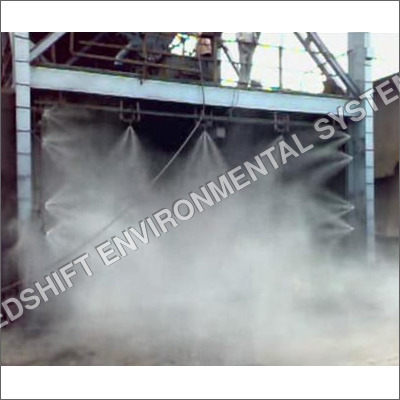
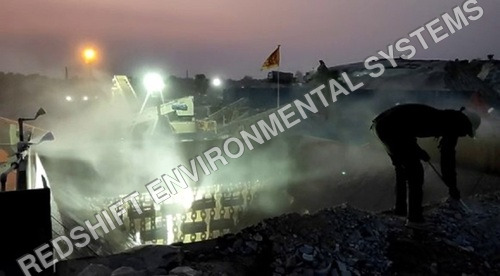
Efficient Dust Suppression for Industrial SettingsDesigned for industrial environments such as mining, cement plants, and power stations, the Dry Fog System excels at managing dust at conveyor transfer points and other emission sources. Micro droplets encapsulate fine particulates, reducing their spread and improving workplace air quality. Customizable unit dimensions and mounting options offer seamless integration.
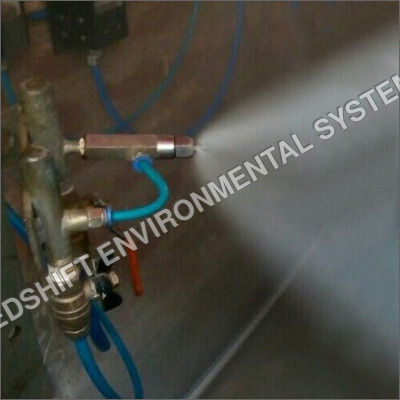
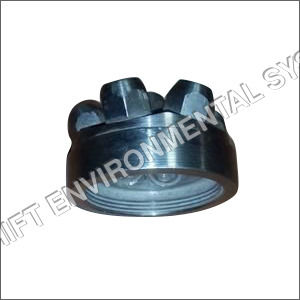
Innovative Ultrasonic and Pneumatic Fog GenerationThe system can use either ultrasonic or pneumatic nozzles to form ultrafine droplets, ensuring high-efficiency dust capture. An integrated water filter, corrosion-resistant chassis, and micro fog cooling optimize performance even in harsh conditions. Adjustable capacities and digital control options accommodate varying operational scales.
Advanced Control and ConnectivityOperators benefit from an optional PLC-based control panel, as well as compatibility with SCADA and IoT systems for remote monitoring and automation. Onboard sensors track flow, pressure, and humidity, increasing operational reliability while simplifying diagnostics and maintenance procedures.
FAQ's of Industrial Dry Fog Dust Suppression System:
Q: How does the Industrial Dry Fog Dust Suppression System effectively control airborne dust?
A: This system uses ultrasonic or pneumatic nozzles to generate a fine "dry fog" of 10-25 micron droplets that encapsulate particulate matter such as PM10 and PM2.5. The fog efficiently binds dust in the air, causing it to settle while maintaining low moisture levels, ensuring surfaces and equipment stay dry.
Q: What are the installation options and suitable sites for this dust suppression system?
A: The unit can be skid, wall, or pipe mounted and is designed for both indoor and outdoor environments. Typical applications include industrial plants, mining operations, conveyor transfer zones, cement and power plants-where airborne dust concentration is a concern.
Q: When is maintenance required, and what does it involve?
A: Maintenance requirements are minimal, mainly involving the periodic cleaning of nozzles and routine checks of the water filter system. With its low-maintenance design, users benefit from continuous dust control with simple servicing.
Q: Where can customization be applied in the system setup?
A: Customization is available based on site-specific requirements, including unit capacity, mounting type, control panel features, connectivity (SCADA, IoT), and dimensions. Our engineers support bespoke solutions for unique plant configurations or process needs.
Q: What is the process for dust suppression, and how is the system automated?
A: Water is pressurized to 2-7 bar and atomized via ultrasonic or pneumatic nozzles. Sensors monitor flow and humidity, and an optional PLC panel enables semi-automatic or fully automatic operation. Digital or analog displays provide easy monitoring of system parameters.
Q: Which benefits does the dry fog dust suppression approach offer over traditional methods?
A: Compared to water spray systems, dry fog technology ensures >95% efficiency in capturing fine dust while preventing excessive wetting. Continuous operation, adjustable output, corrosion resistance, and low noise (<70 dB) contribute to improved air quality and workplace safety.
Q: What standards does the system comply with, and how is safety ensured?
A: The system conforms to CE and ISO 9001:2015 certification, and features an IP55 ingress protection rating for safe operation in dusty or wet environments. Construction from stainless steel and engineering plastics further assures durability and corrosion resistance.






 English
 Spanish
 French
 German
 Italian
 Chinese (Simplified)
 Japanese
 Korean
 Arabic
 Portuguese
 Send Inquiry
 Get Latest Price

